


The Generational Evolution of International Exhibition Stand Design and the Outlook Beyond 2026
For companies planning to exhibit overseas for the first time, the wide range of information on international stand design can be overwhelming, with scattered references to styles, pricing, and services that make it hard to know where to start. Many people don’t realize that the standards, aesthetic preferences, and service processes we see in overseas stand design today did not emerge overnight—they are the result of decades of industry evolution. By tracing the industry’s development from its early days to the present, and understanding where it is headed, first-time exhibitors can move beyond judging a stand solely by its immediate visual impact and make choices that better fit their own needs.
Phase 1: The Era of Material Piling (1950s–1970s)
The modern overseas exhibition industry first took shape in the industrialized countries of Europe and North America. After World War II, global trade recovered rapidly, and specialized trade shows emerged across various industrial sectors. The core logic of exhibiting at this stage was straightforward: bring as many products as possible to the venue so that visitors could immediately see the company’s strength. During this period, stands had no complex design concepts. Most were built on empty floor space allocated by the venue, with simple hard display walls, large industrial products and samples neatly arranged on tabletops, walls painted in the company’s brand color, and basic product descriptions printed on them. There were no professional stand design companies at the time; construction was mostly handled by engineering teams affiliated with the exhibition venue, and the only key requirements were a sturdy structure and enough space to fit all exhibits. This model had clear limitations of its era: stands had no clear visitor flow planning, making it easy for attendees to get lost; there were no dedicated meeting areas, so all conversations had to take place next to the exhibits; stands looked highly similar from one company to another, making it difficult to stand out among dense booths; and construction materials were mainly heavy solid wood and brick-and-concrete structures, most of which had to be treated as construction waste after the show, resulting in extremely high costs and significant waste. The characteristics of this phase can still be seen in exhibitions in some emerging markets today, but in mature markets such as Europe, the United States, and Japan, this model has long been obsolete.
Phase 2: The Era of Functional Zoning (1980s–2000)
As global supply chains matured, exhibitions became increasingly commercial, and exhibitors were no longer satisfied with simply displaying products—they began to pursue higher lead-generation efficiency. During this phase, the professional stand design industry began to emerge independently, forming a complete service chain of “design–construction–dismantling,” and functional zoning became the defining feature of stand design in this era. Designers began dividing stands into separate functional areas based on exhibition objectives: a core product display area, a business meeting area, a reception area, a storage area, and even dedicated product demonstration zones. Visitors entering the stand would follow a pre-designed flow, moving sequentially through reception, product introduction, and in-depth discussion, significantly improving exhibition efficiency compared with the previous phase. At the same time, stand design styles began to show clear regional differences across countries:
- As one of the countries with the highest density of industrial trade shows in the world, Germany’s stand design began to emphasize rational, rigorous industrial aesthetics, focusing on structural compliance and material durability, with every design detail serving the professional presentation of industrial products;
- U.S. exhibitions were more commercially conversion-oriented, with stand design incorporating more interactive elements, such as live demonstrations and small experience installations, to quickly attract passing visitors;
- Japanese stand design began to reflect refined, meticulous characteristics, emphasizing space utilization—even small booths were clearly divided into functional areas with carefully handled details;
- Russian exhibitions placed greater emphasis on visual impact, as local venues generally offered spacious floor plans, making large-span structural designs more effective at drawing visitor attention. It was also during this phase that the concept of modular construction began to spread. Standardized display frames and reusable panels replaced the one-time brick-and-concrete structures of the past, significantly reducing build and dismantling time and lowering costs. For first-time exhibitors encountering overseas stands, the concepts of “functional zoning” and “modular construction” established in this phase remain fundamental industry principles to this day.
Phase 3: The Era of Experience and Sustainability (2010–Present)
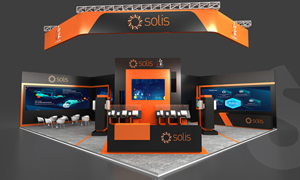
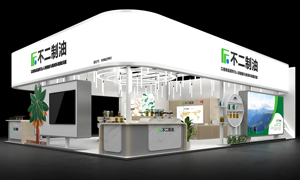
With the spread of mobile internet, the way visitors access information has changed fundamentally: many people already research a company’s products online before the show, so attending the exhibition is no longer just about “seeing products,” but about gaining real offline experiences and building face-to-face trust with the team. This shift directly drove the third iteration of international stand design. Today’s overseas stands have long moved beyond the basic functions of “displaying products and discussing cooperation,” and are developing toward experiential, scenario-based design. For example, for a smart hardware company exhibiting for the first time at a German industrial trade show, the stand would not simply place devices in glass cases; instead, it would recreate a real usage scenario, allowing visitors to operate the equipment hands-on and experience its functions on site. The lighting, scent, and background music of the stand would all be carefully designed to extend visitor dwell time and deepen brand impression. Another notable industry change is the widespread adoption of sustainability principles. European venues early on introduced clear requirements for the environmental performance of construction materials and the carbon footprint of the build process. Today’s overseas stand design prioritizes recyclable aluminum display frames and biodegradable decorative materials, minimizing the use of one-time finishing materials. Many companies no longer design stands for single-use builds; instead, they retain the core structural framework and only replace partial decorative graphics and lighting arrangements for each show, significantly reducing long-term exhibition costs. During this phase, a large number of Chinese companies expanding into overseas markets entered international trade shows, and local service providers—represented by Shanghai-based stand design and build companies—also began to develop the capability to take on overseas projects. Compared with local overseas construction companies, domestic teams familiar with Chinese companies’ brand needs often have unique advantages in communication efficiency and understanding requirements, giving first-time overseas exhibitors more options.
Industry Outlook Beyond 2026
Looking ahead from the vantage point of 2026, the trajectory of overseas exhibition stand design is already taking clear shape. For first-time exhibitors planning to take their brand abroad, understanding these trends in advance can help avoid costly detours in future build decisions. First, hybrid online-offline stands will become the norm. A growing number of overseas stands now integrate AR interactive elements: visitors scan a QR code on the stand to view 3D product models, detailed specifications, or even book a follow-up factory tour online. Meanwhile, remote audiences can join live product presentations in real time via the stand’s streaming setup. This integration goes beyond simply placing a screen on the stand—it combines offline experiences with online private-domain traffic operations, extending the stand’s value beyond the three days of the show to cover the full pre- and post-show lifecycle. Second, cultural adaptation will become a core design consideration. Many first-time exhibitors simply replicate their domestic stand design for overseas markets, only to fall short of expectations due to cultural differences. Future stand design will move away from a one-size-fits-all “international style” and instead adapt to specific national markets: for example, exhibiting in Japan will emphasize courteous attention to detail and spatial comfort; in Germany, the focus will be on technical professionalism and structural precision; in emerging markets such as the Middle East and Australia, designs will prioritize visual openness and interactivity. This adaptation does not require complex overhauls—often, targeted adjustments to color palettes, visitor flow, and interaction formats can significantly improve local audience acceptance. Third, cost structures will shift toward a long-term perspective. In the past, many companies calculated exhibition costs based solely on a single build. In the future, overseas exhibiting will increasingly emphasize “reusable assets.” For instance, a company can develop a core modular stand framework, pairing it with industrial-style finishes for shows in Germany, more vibrant commercial-style decor for the U.S., and refined lighting and details for Japan. Over time, this approach will significantly reduce overall exhibition costs compared to building from scratch each time. For small and medium-sized enterprises with limited budgets, this long-term asset mindset offers more practical value than pursuing a “luxury look” for a single event.
For newcomers to overseas exhibition stand design, understanding the industry’s evolution essentially means avoiding two common pitfalls: blindly imitating current popular styles while ignoring their own product attributes and exhibition goals; and focusing only on the price of a single build while overlooking long-term exhibition costs and brand accumulation. From the past approach of simply piling up materials, to functional zoning, to today’s experience-driven and sustainable design, every iteration of the industry centers on the core mission of “better connecting companies with their target customers.” Following this logic when choosing a stand design company—whether working with a local overseas team or a Shanghai exhibition stand builder experienced in international expansion—will lead to more suitable decisions.
Featured Projects
View more >Related News
View more >- Guide to Comparing and Evaluating US Exhibition Stand Design Options
- Shanghai Exhibition Stand Design & Build: Advanced Selection Comparison and Evaluation Guide
- The Generational Evolution of Exhibition Stand Builders from a Cost-Effectiveness Perspective and a Post-2026 Selection Guide
- The Generational Evolution of International Exhibition Stand Design and the Outlook Beyond 2026
- 2026 Japan Exhibition Stand Construction: A Complete Decision-Making Guide for First-Time Exhibitors
- 2026 Russia Exhibition Stand Design Trends and Decision-Making Guide for First-Time Exhibitors
- The Evolution of Cost-Effectiveness in German Exhibition Stand Design: A Guide for SMEs
- A Practical Decision-Making Guide for First-Time Exhibition Stand Builders in Germany
- A Pitfall-Avoidance Guide for SMEs Building Overseas Exhibition Stands: Breaking Down Cost-Effectiveness Decision Mistakes
- 2026 US Exhibition Stand Building: Trend Insights and Scenario Guide for First-Timers
- Shanghai Exhibition Stand Builders: 2026 Trend Comparison and Selection Guide
- Overseas Exhibition Stand Construction: A Complete Decision Guide Comparing In-House vs. Outsourced Processes
- Advanced Guide to European Exhibition Stand Construction for Experienced Practitioners
- Common Questions About Exhibition Stand Design and Build in Shanghai: A Comparative Guide
- Russia Exhibition Stand Construction: A Practical Cost-Effectiveness Guide for SMEs
- A Beginner's Guide to Japanese Exhibition Stand Design: From Basics to Practical Execution
- 2027 Australia Exhibition Stand Building Beginner's Decision-Making Guide
- German Exhibition Stand Design: A Guide to Management Decision-Making Scenarios
 +86 21 6804 6142

Scan to chat with us on WeChat
for more trade show news